
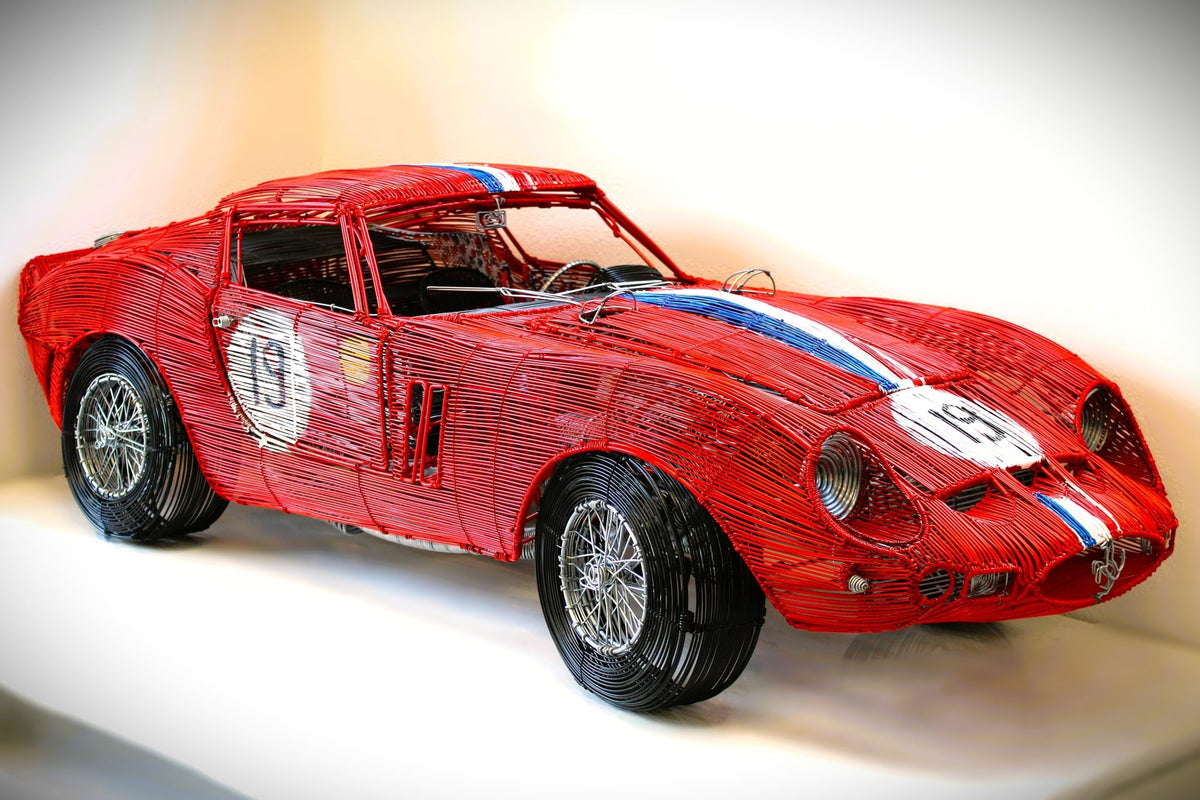

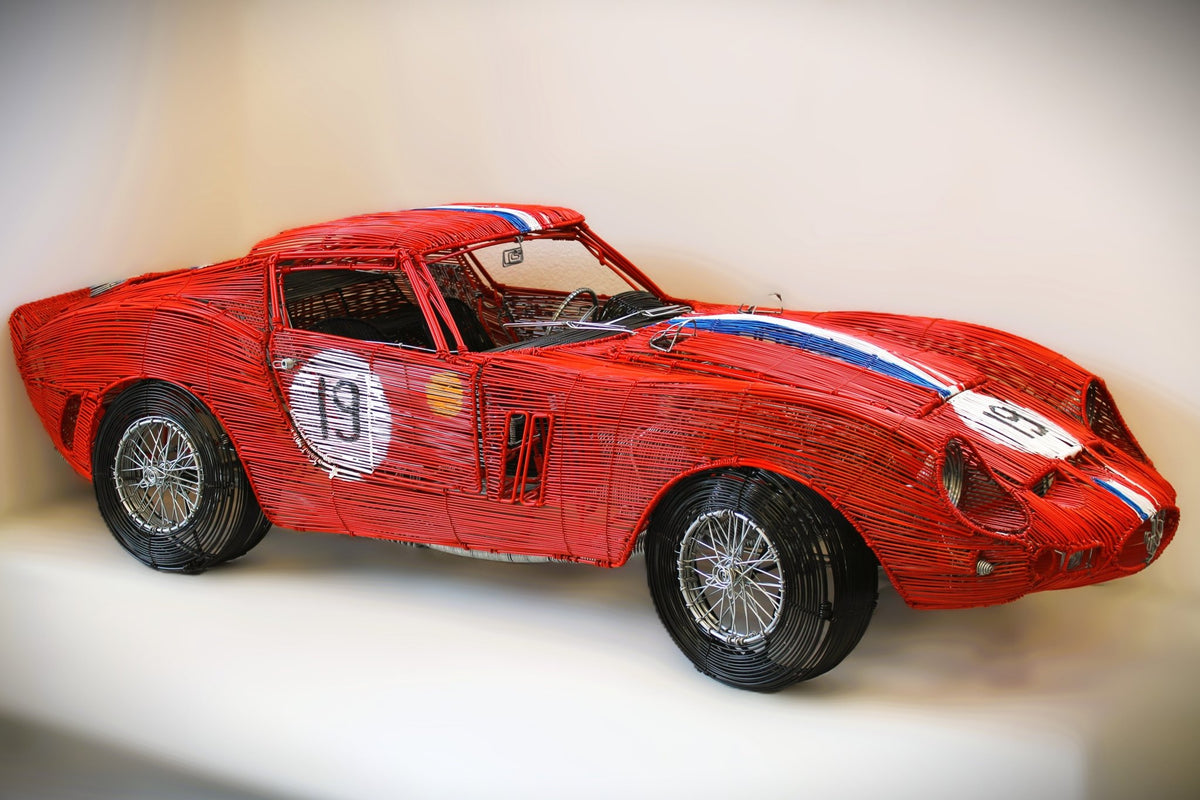


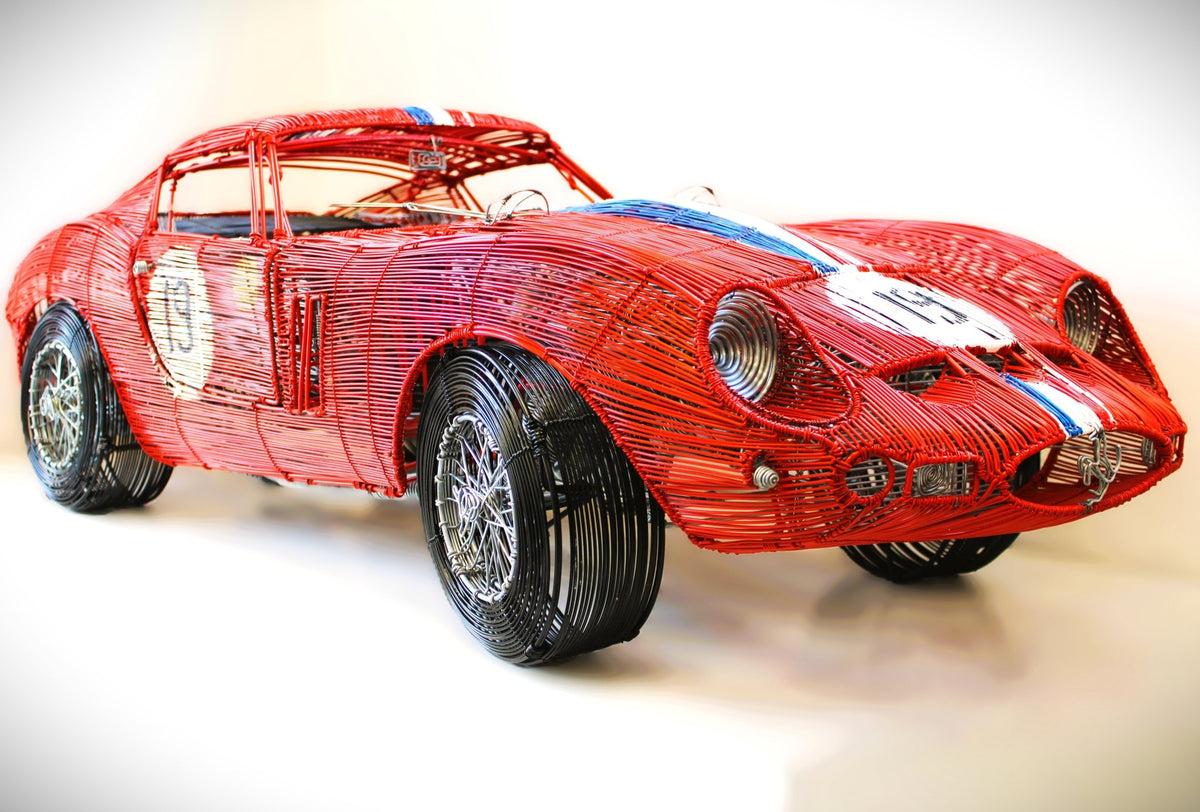






An extraordinary large-scale kinetic sculpture inspired by one of the most significant Ferrari 250 GTOs ever raced.
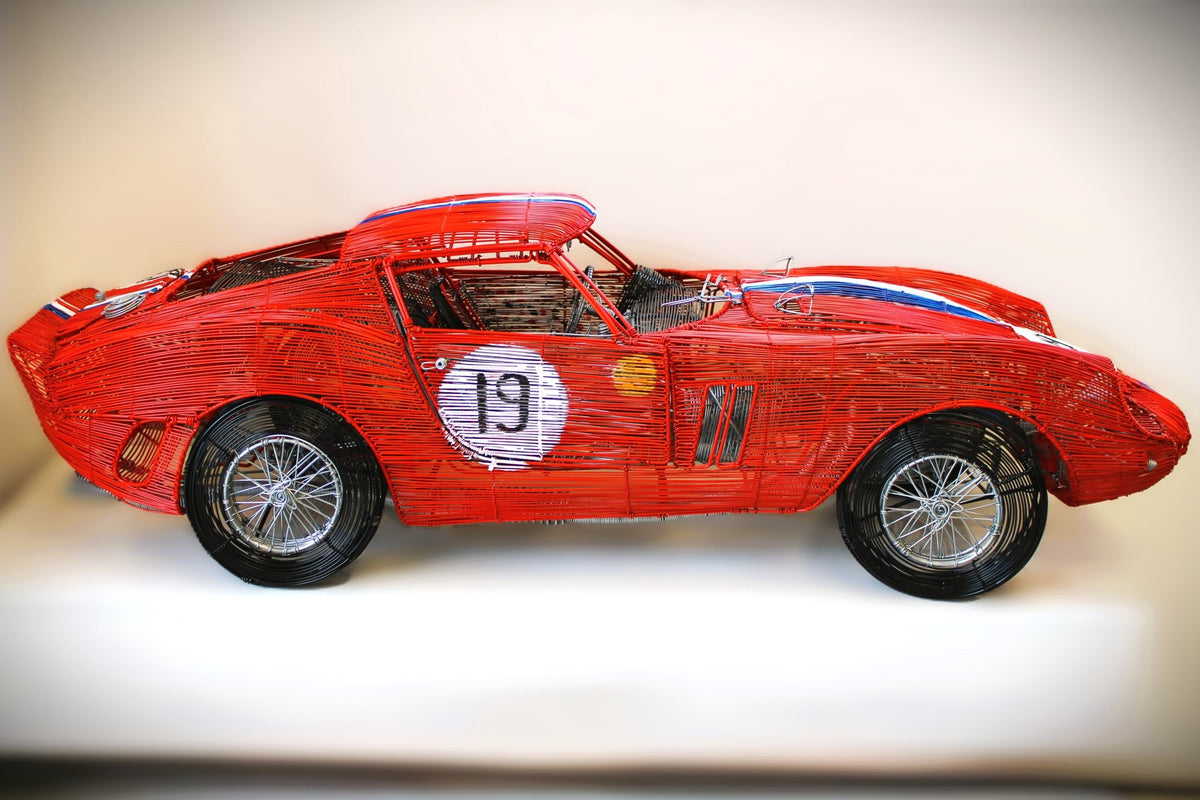
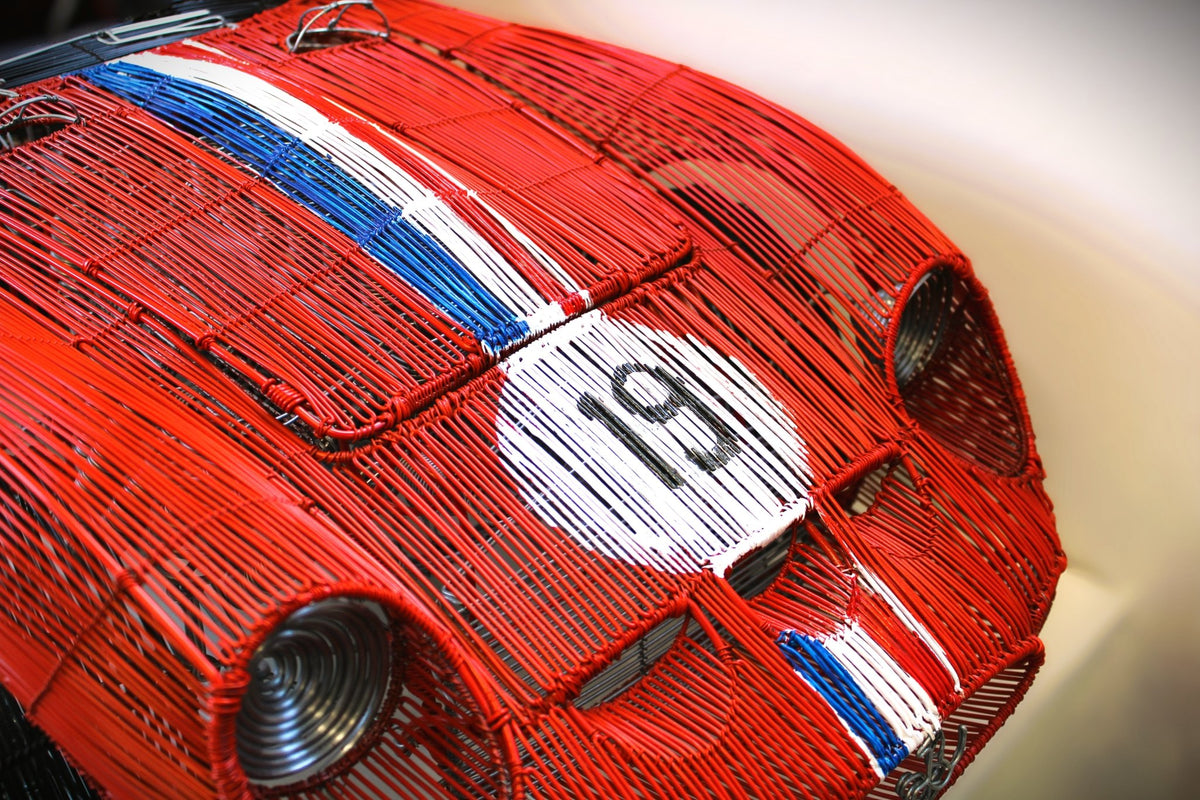
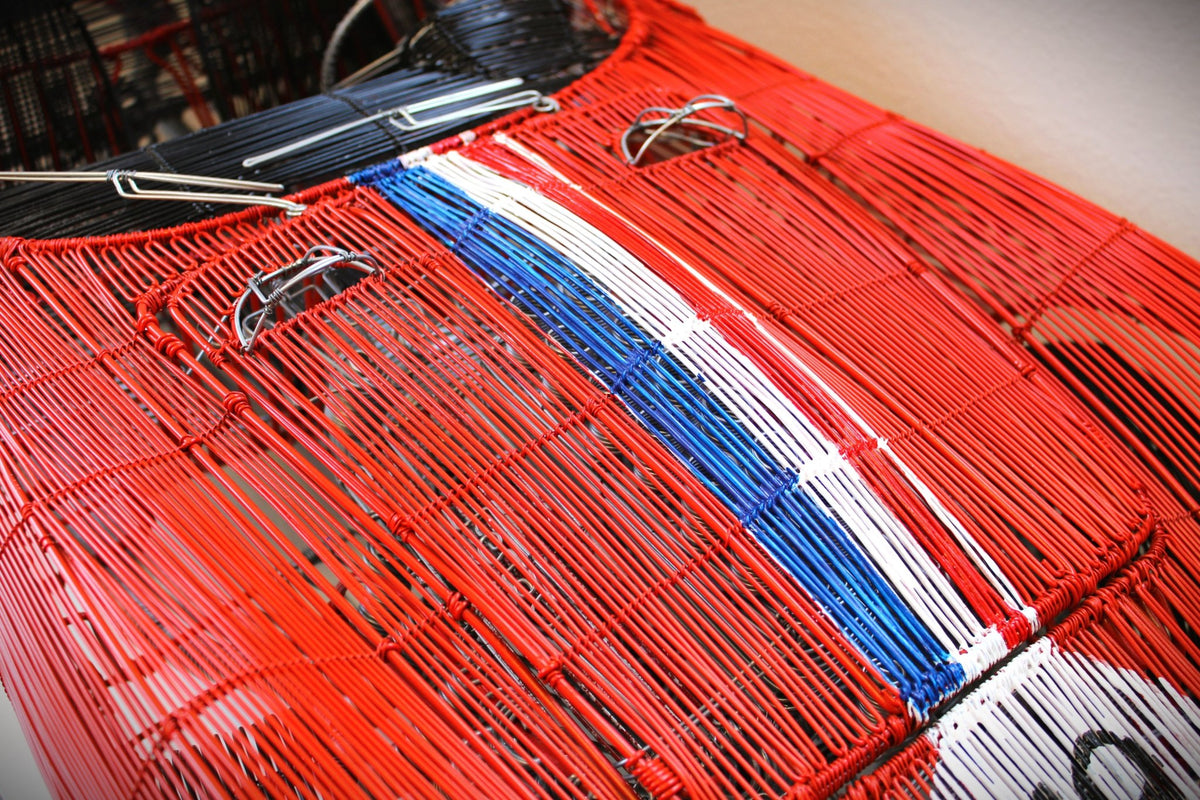
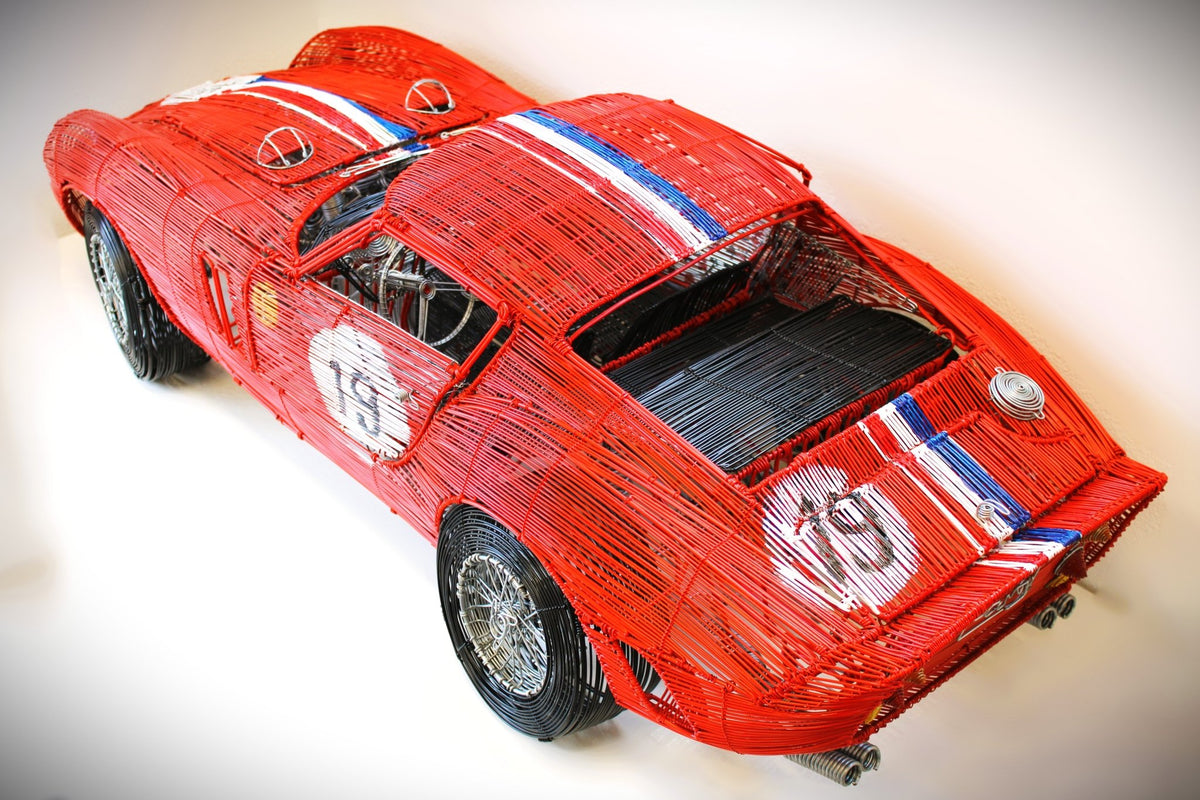
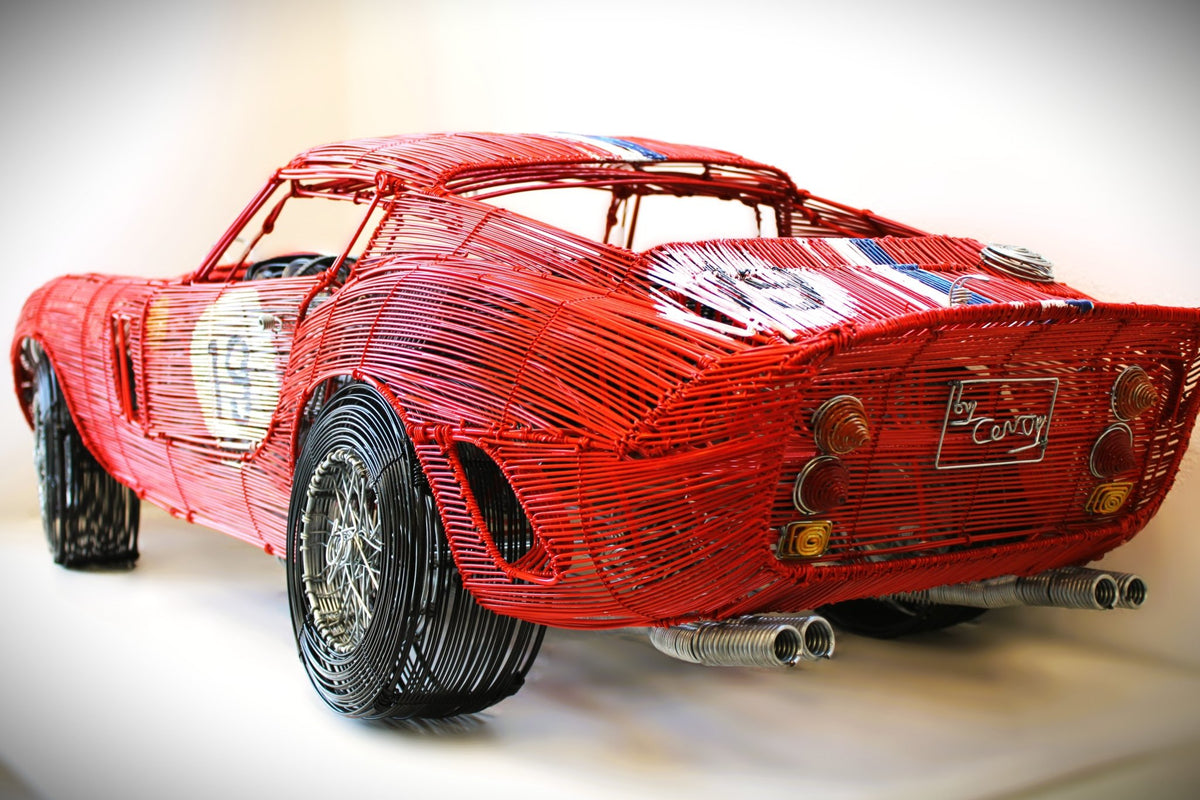
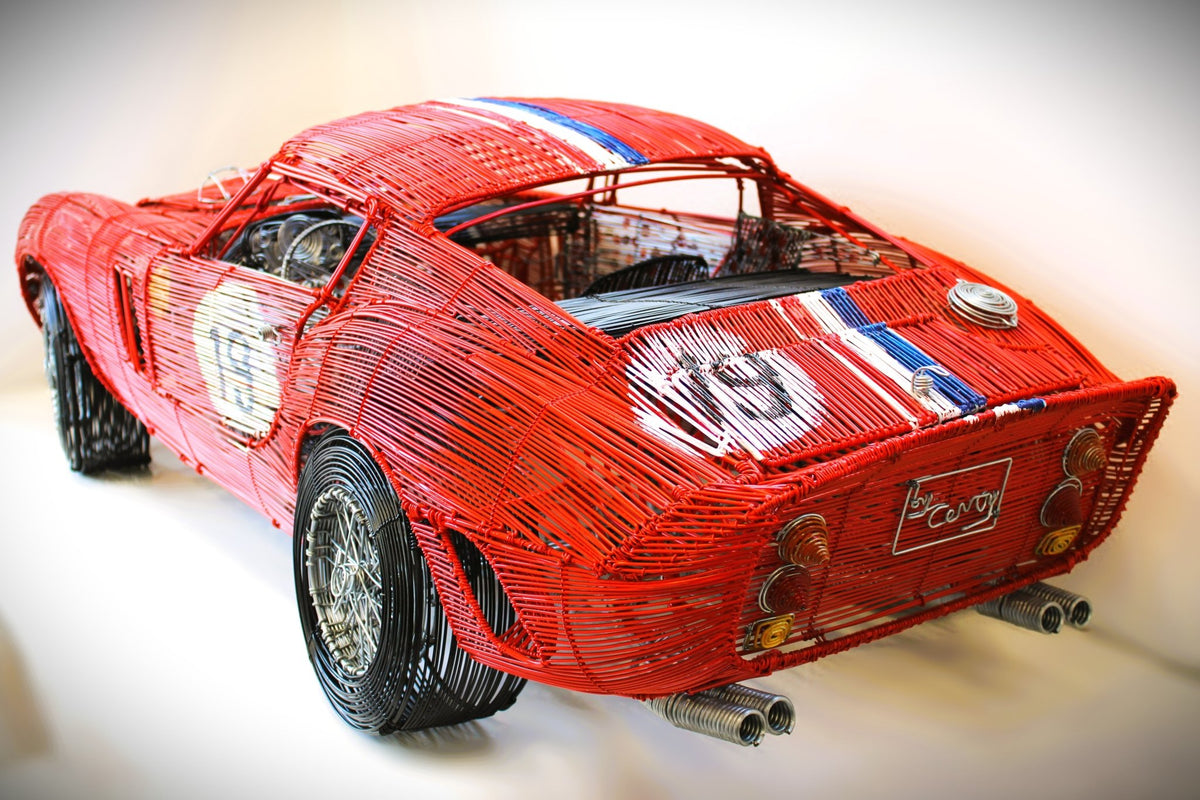
The red No. 19 Ferrari 250 GTO, chassis 3705GT, was driven by Jean Guichet and Pierre Noblet at the 1962 24 Hours of Le Mans, finishing an incredible second overall and first in the GT class. This sculpture recreates the distinctive No. 19 car, complete with its French tricolor racing stripe.
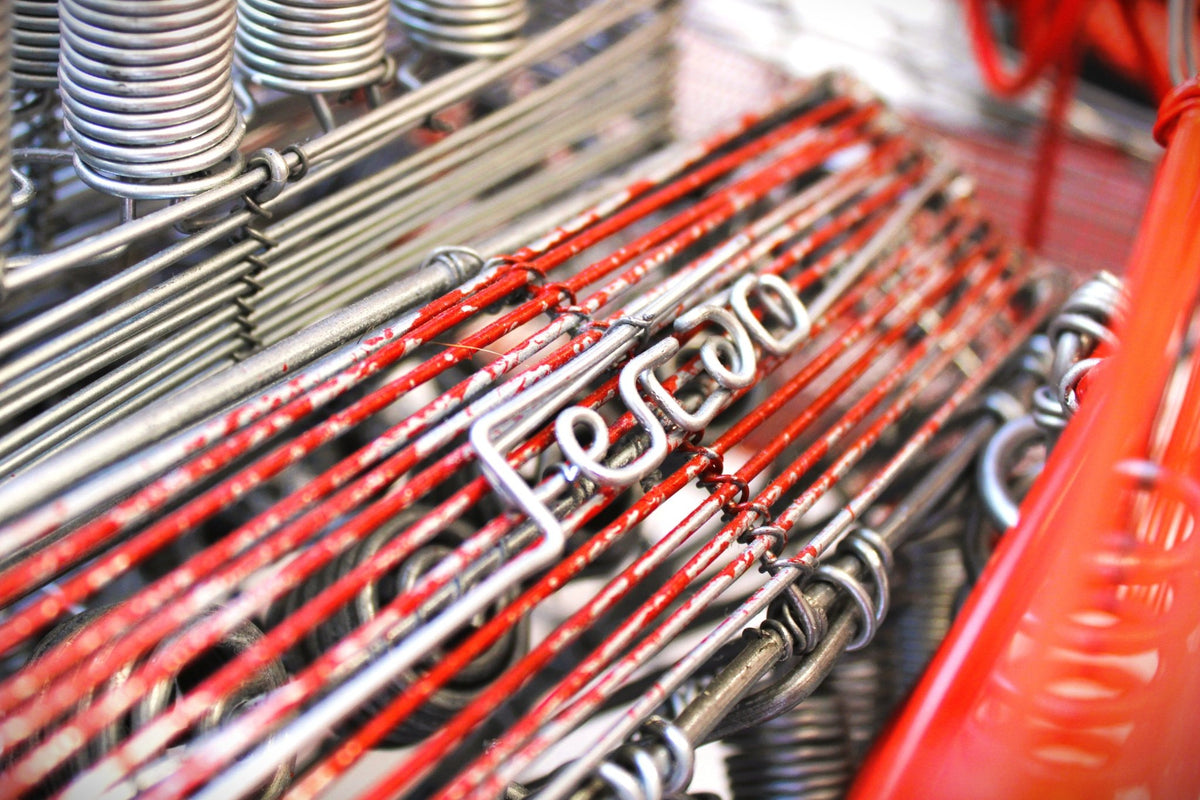
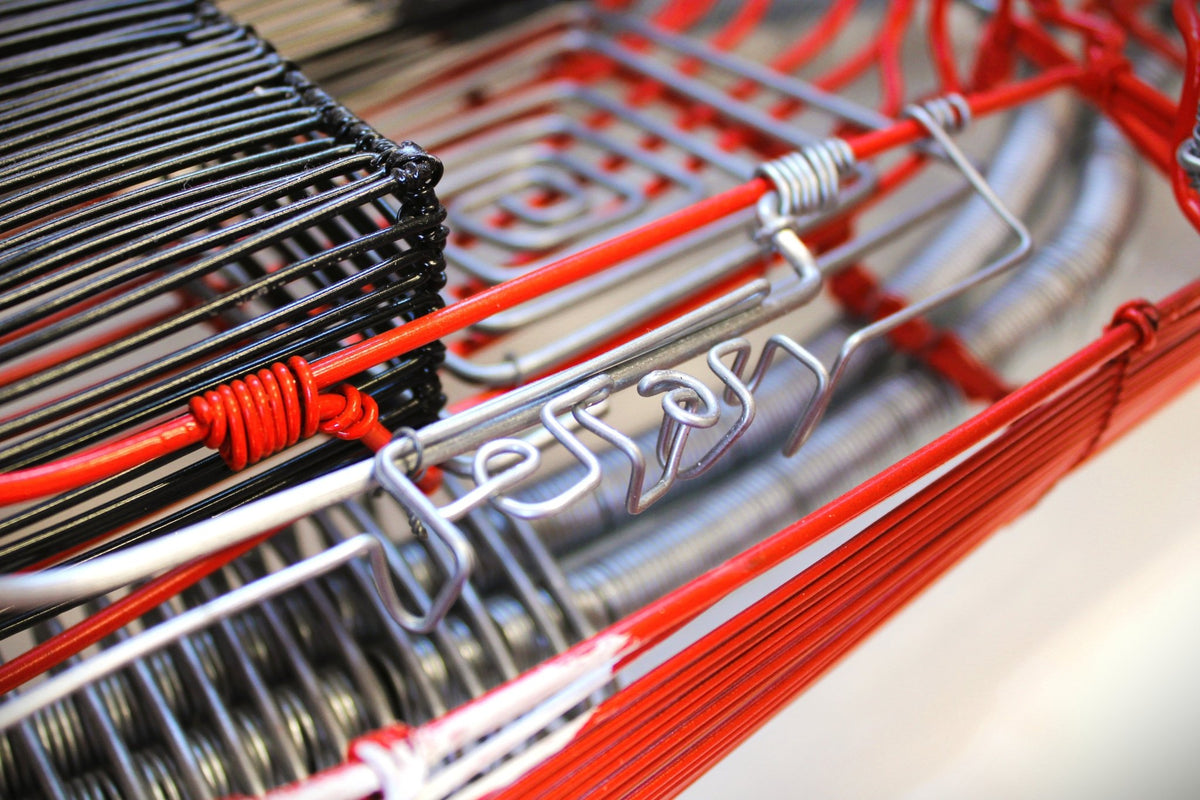
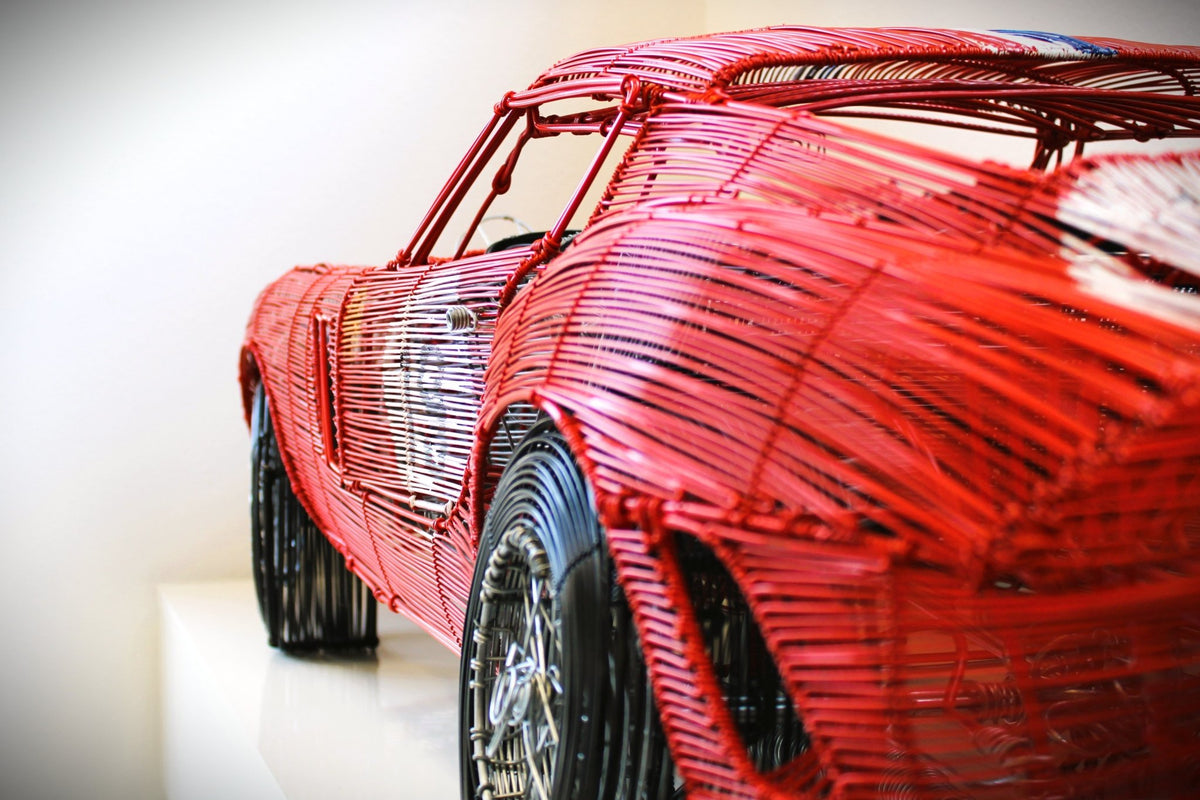
Measuring an impressive 48 inches long and weighing approximately 42 pounds, the sculpture is constructed almost entirely from intricately formed and twisted wire. From a distance, the unmistakable shape of the 250 GTO dominates. Up close, the sheer amount of mechanical detail becomes apparent.
And it doesn't stop at what you can see.
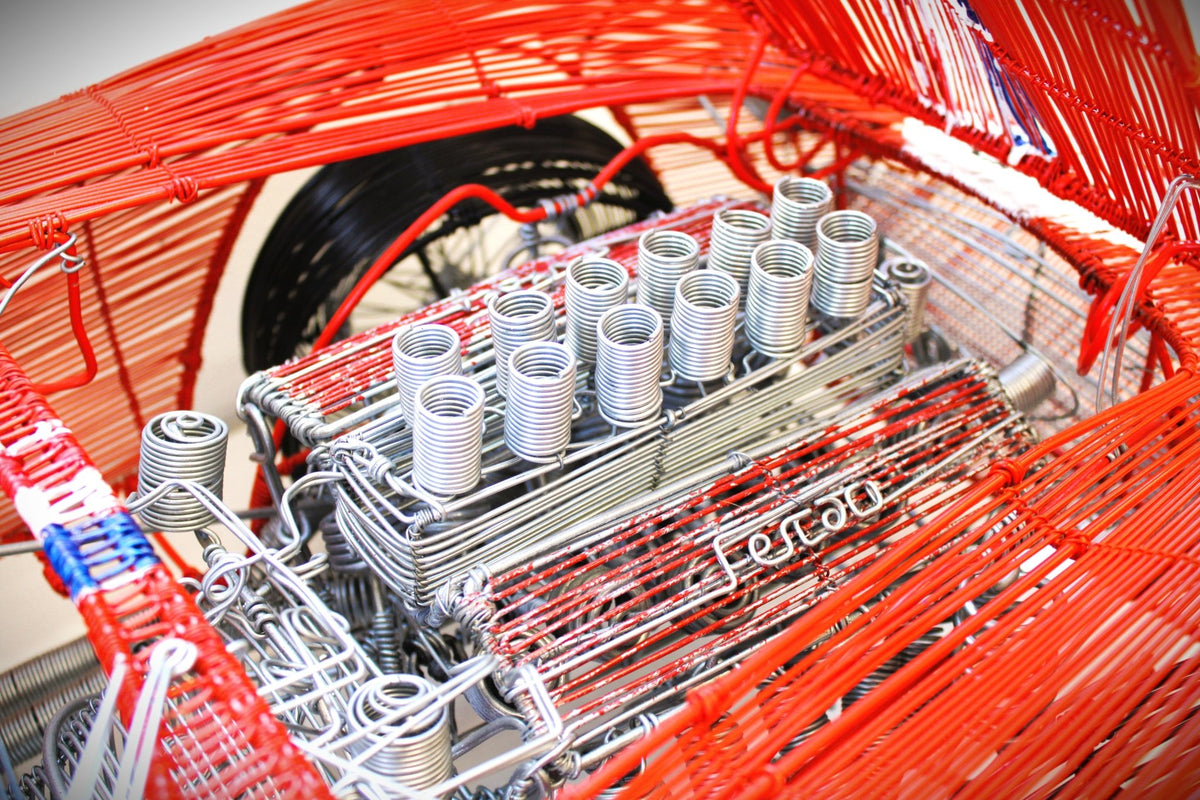
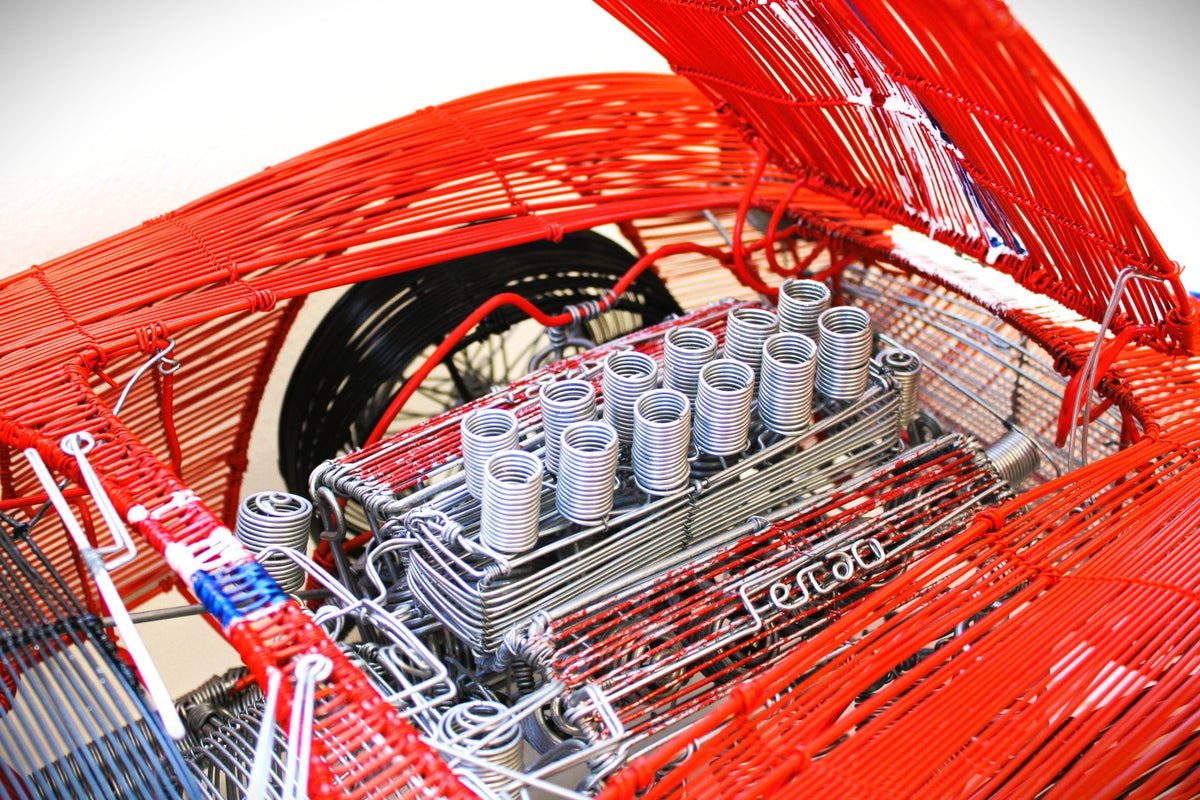
Roll the car forward and the rear wheels turn a working differential. The differential rotates the driveshaft, which turns the crankshaft inside the engine — causing the individual pistons to move up and down.
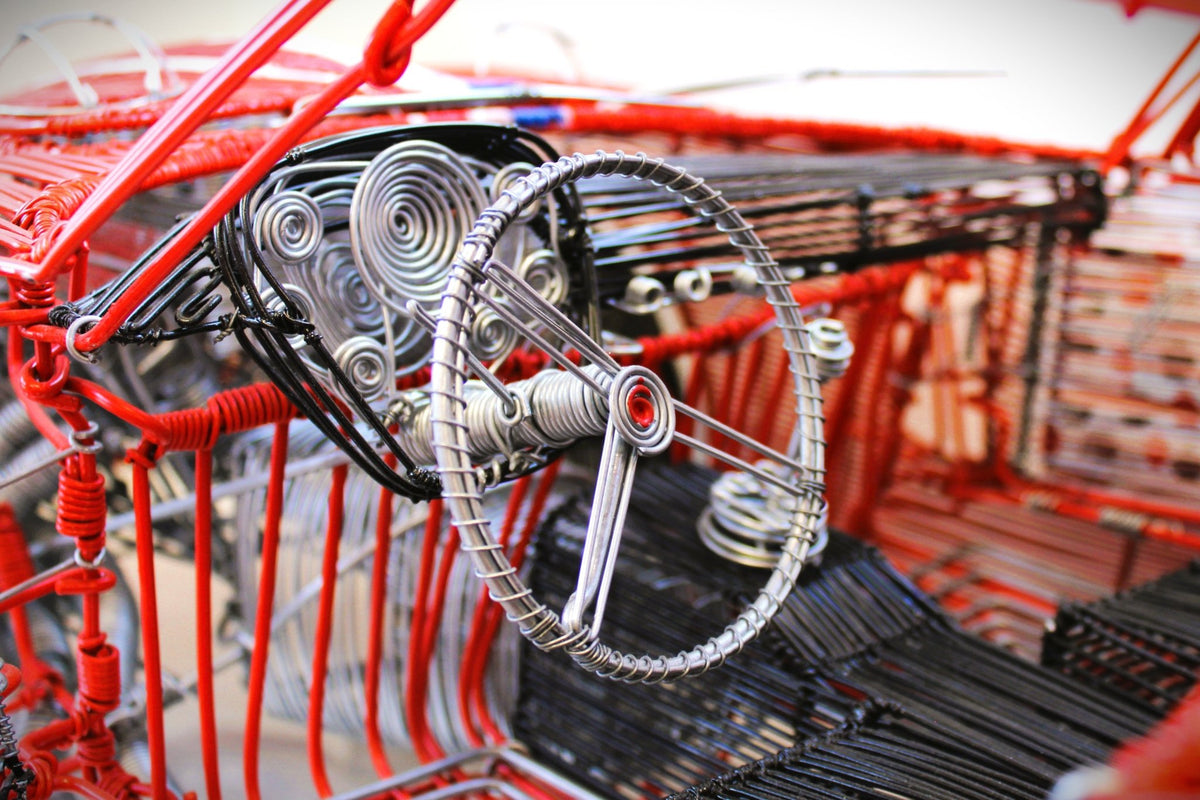
The steering wheel operates the front wheels, while the doors, bonnet and trunk all open to reveal even more detail.
This is far beyond a conventional model car. It is a substantial piece of kinetic automotive sculpture built to be explored from every angle.
The Engine & Drivetrain
Beneath the opening bonnet is an exceptionally detailed representation of the Ferrari V12.
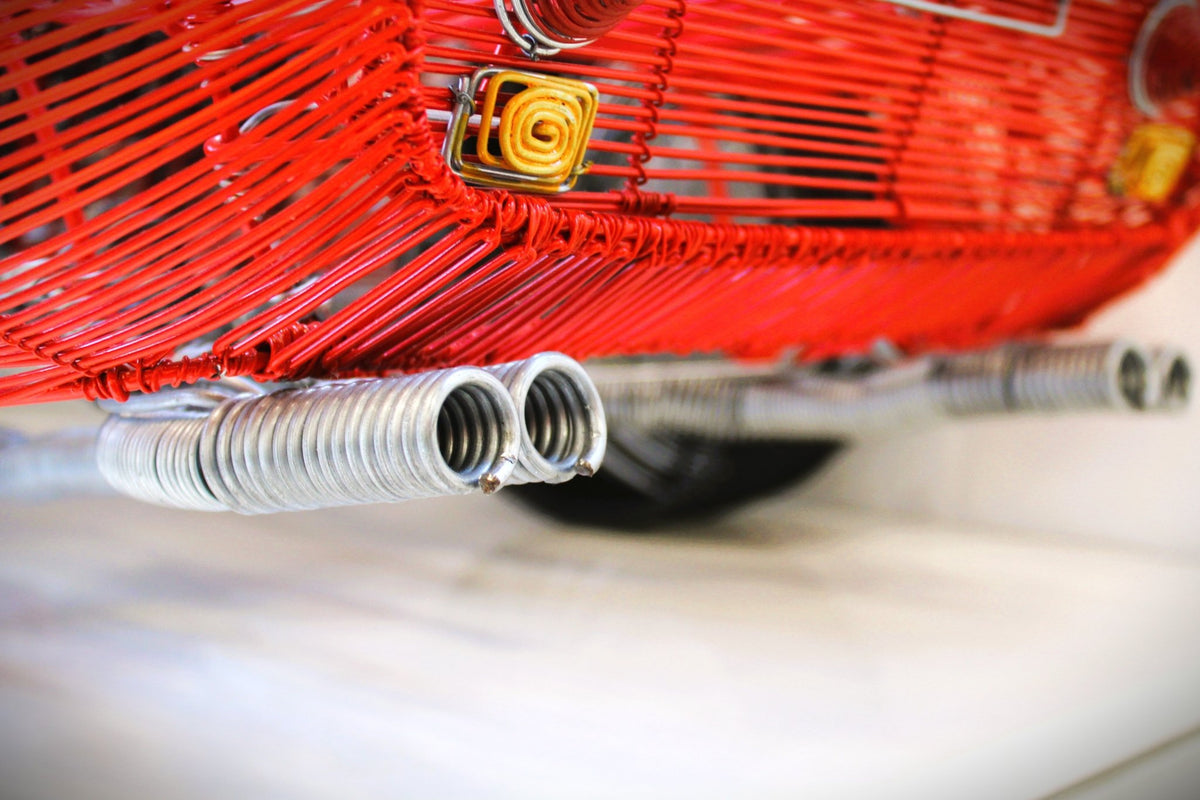
Individual intakes, Ferrari-lettered valve covers, radiator and cooling fan are all recreated in wire, while the exhaust system runs from the engine all the way to the rear of the car.
The drivetrain is mechanically connected from front to rear.
As the sculpture rolls:
Rear wheels → Differential → Driveshaft → Crankshaft → Moving pistons
Watching the internal engine components come to life through nothing more than the movement of the wheels is one of the most remarkable details of the piece.
Exterior Details
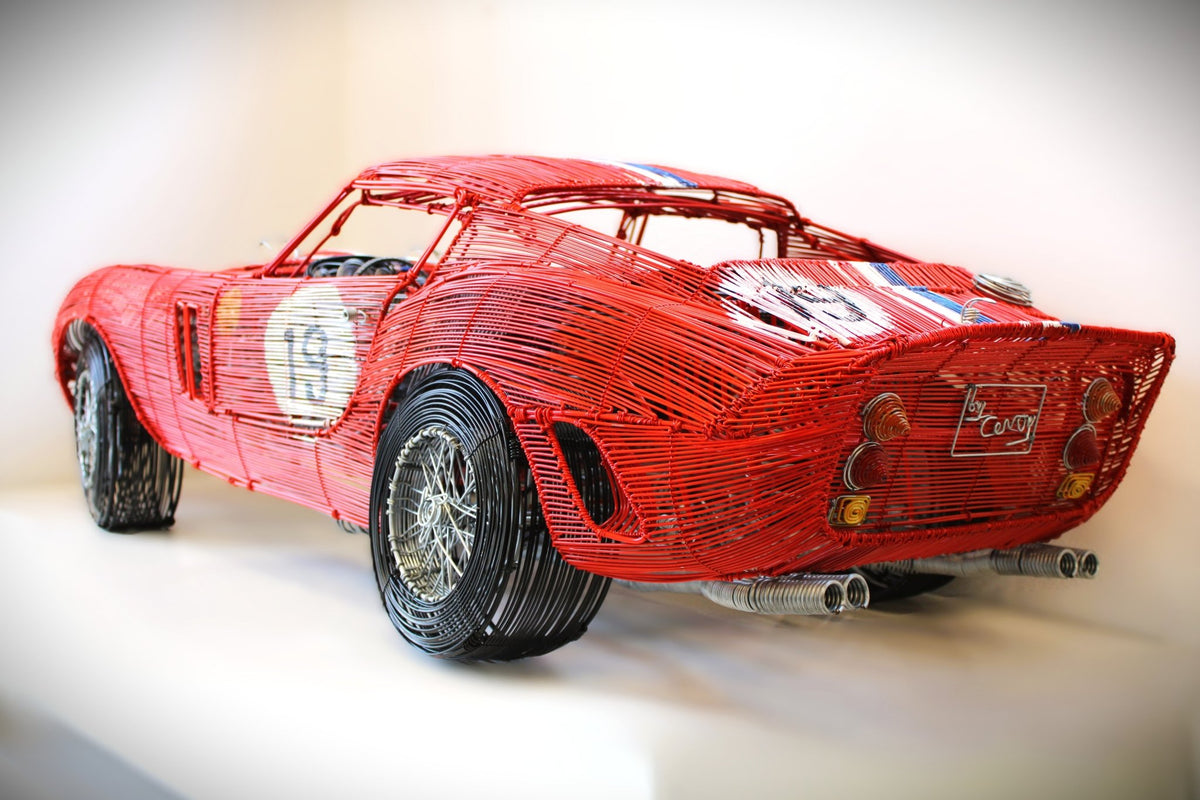
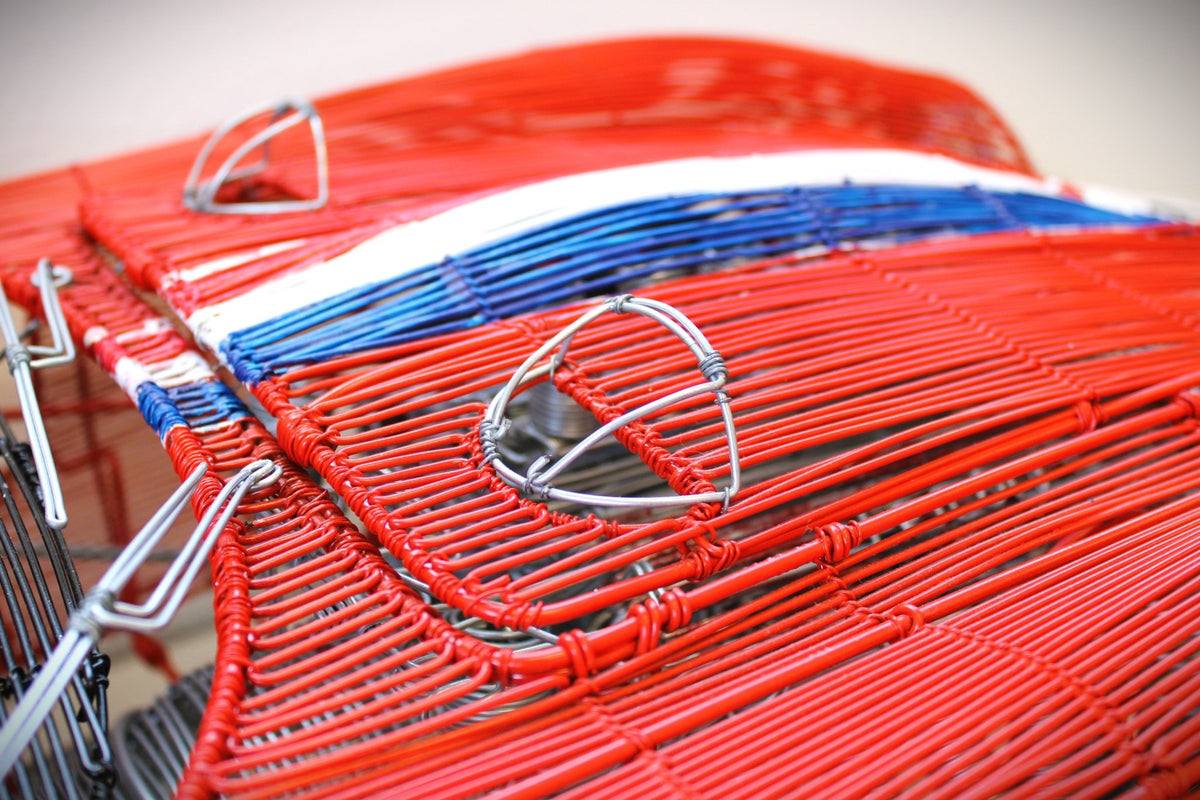
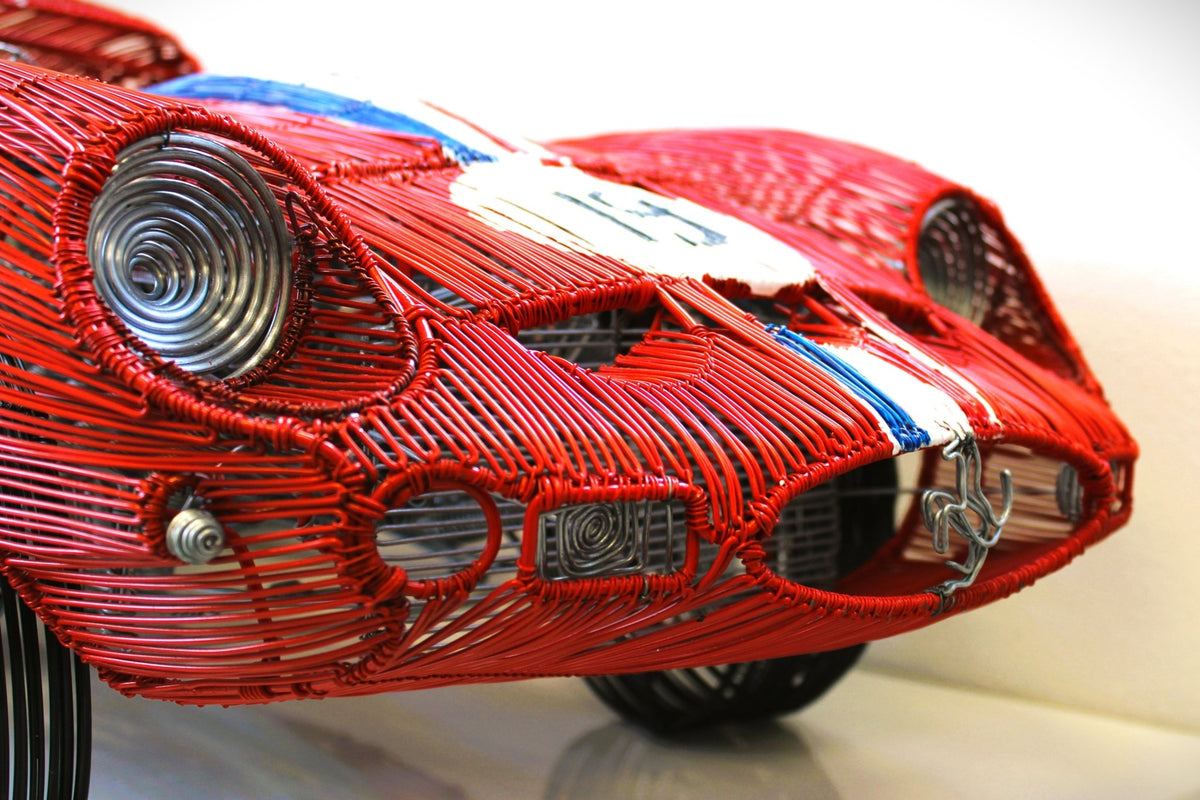
The sculpture is finished in red with a blue, white and red racing stripe and No. 19 racing roundels on the doors.
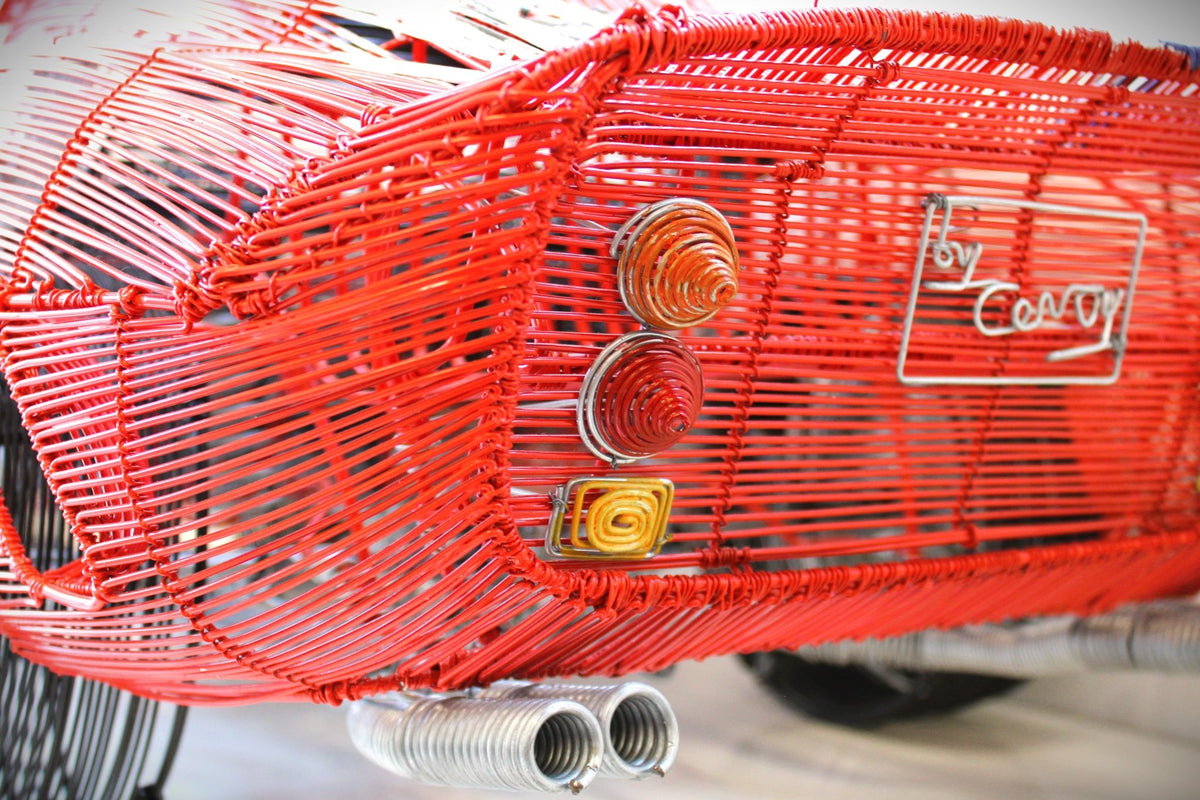
Look closely and you'll find an extraordinary number of details recreated in wire, including:
- Opening bonnet, doors and trunk
- Functional steering
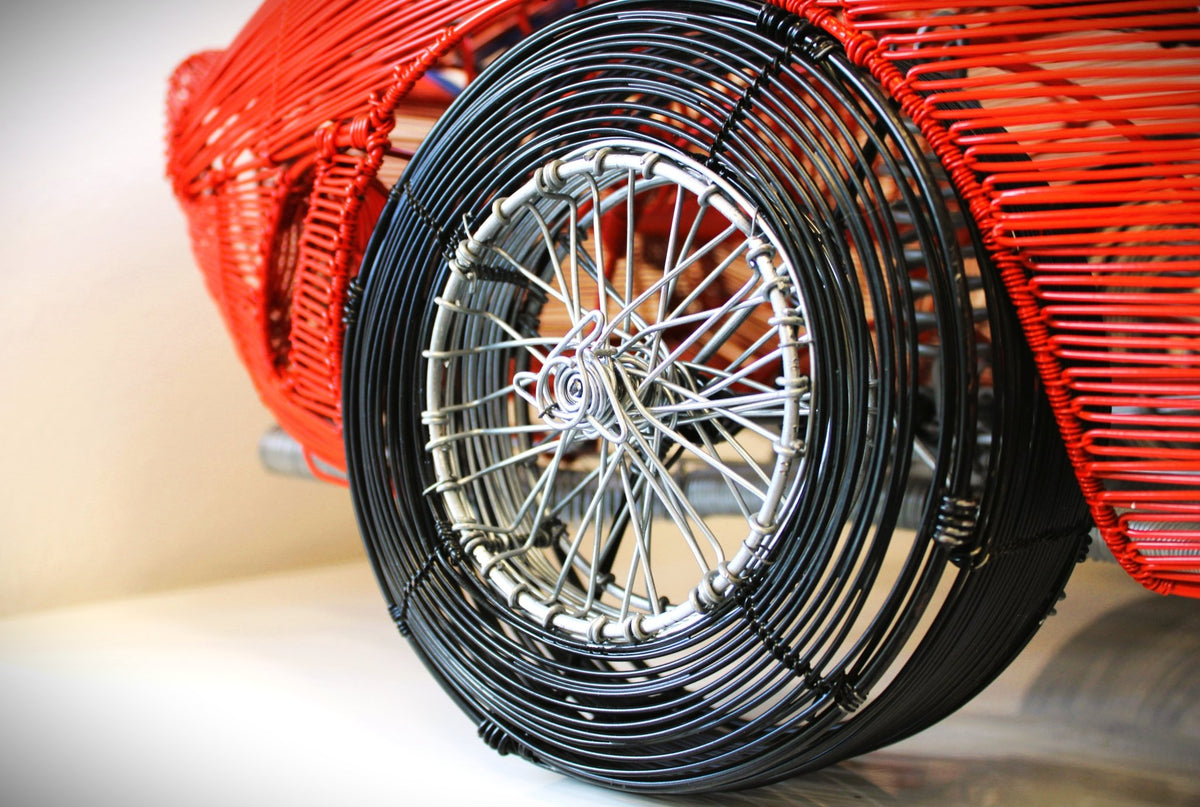
- Wire wheels with knockoffs
- Tires
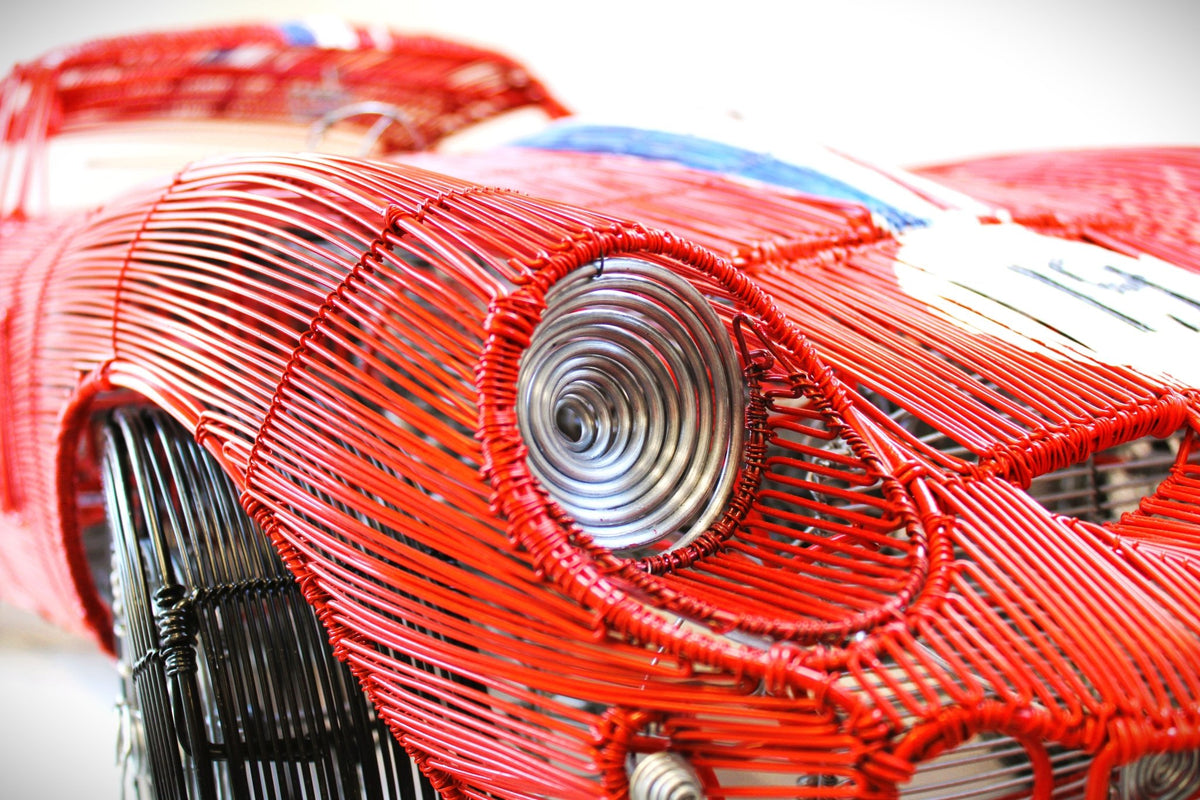
- Headlights and indicators
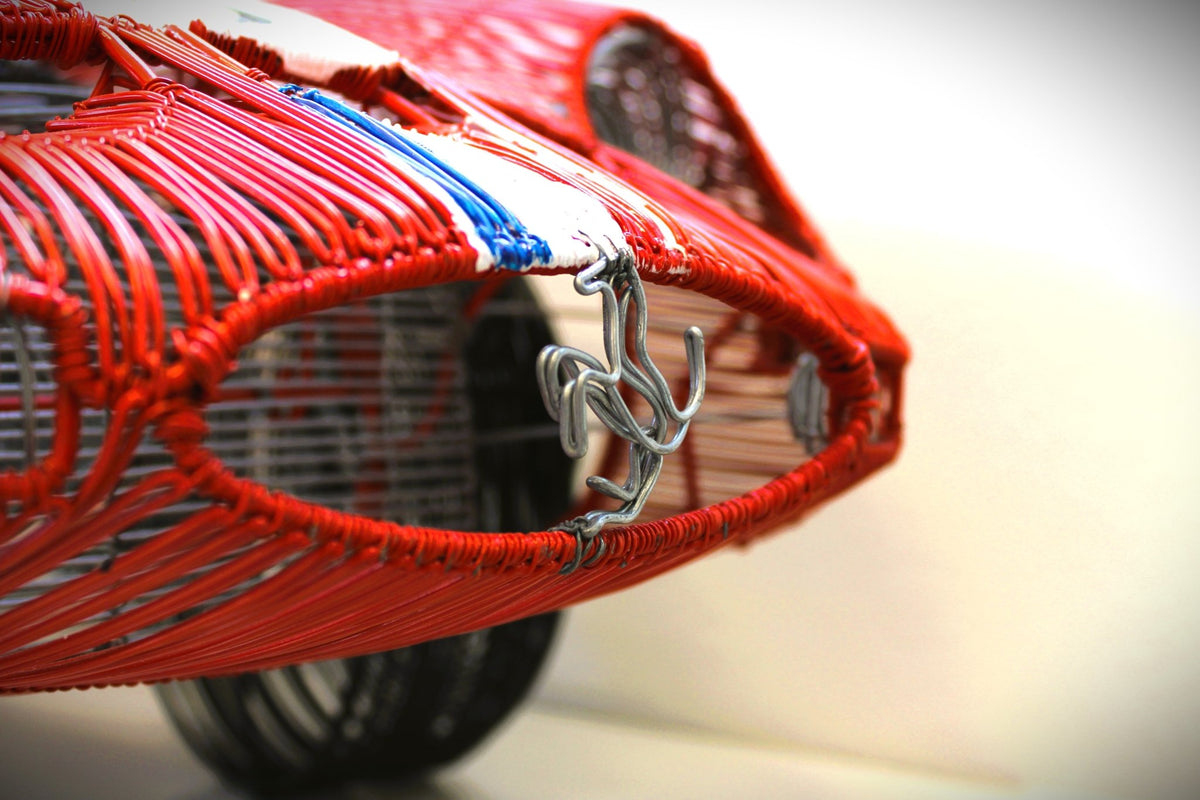
- Front grille
- Rear lights
- Fuel cap
- Door handles
- Ferrari badging
- Full exhaust system
- Detailed chassis and drivetrain
These details have been painstakingly recreated.
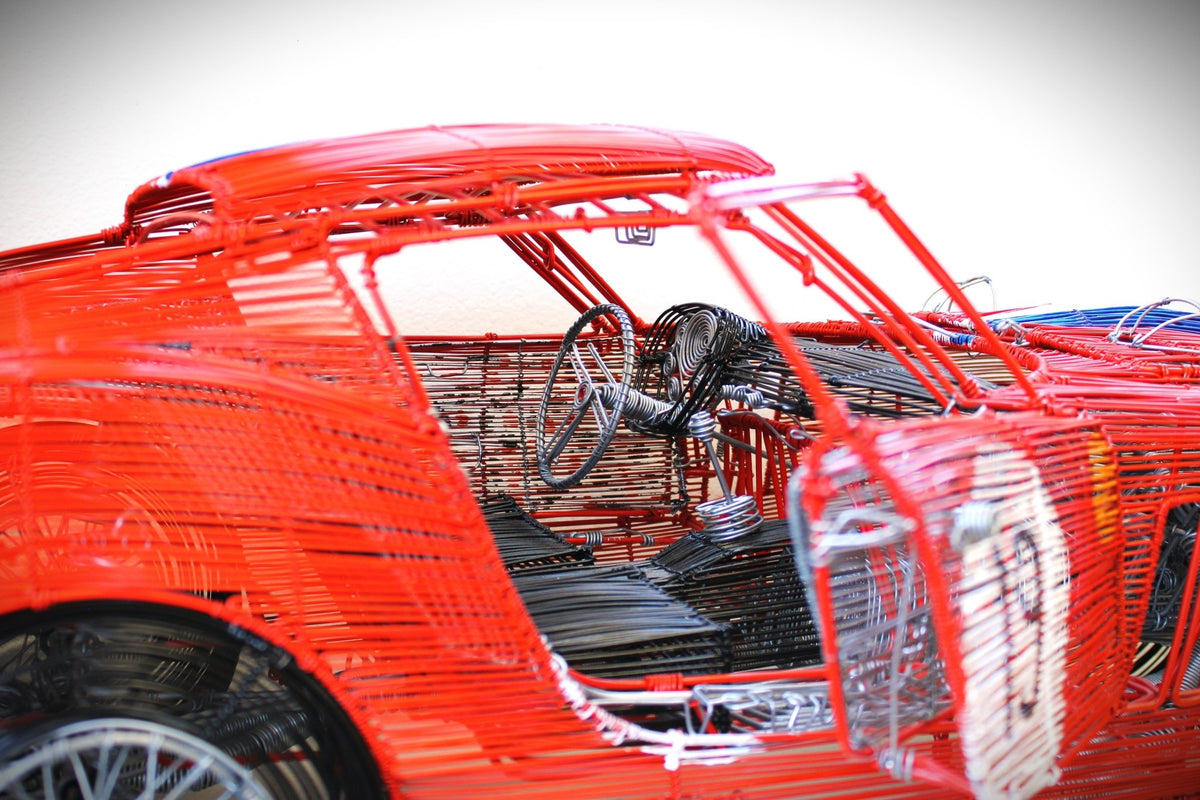
A Complete Interior
Open the doors and the same attention to detail continues inside.
Seats, floor, dashboard, steering wheel and gear lever are all represented, creating a surprisingly complete interior within the open wire construction.
The steering isn't merely decorative — turning the steering wheel moves the front wheels.
Size & Specifications
Length: 48"
Width: 18"
Height: 15"
Weight: approximately 42 lb
The sculpture sits directly on its wheels.
Its four-foot length gives it considerable presence in person. This is not a small display model; it is a substantial automotive artwork intended to become a focal point in a room.
For the Ferrari Collector
The combination of racing history, scale, craftsmanship and functional mechanical detail makes this a particularly unusual piece.
Equally at home in a private automotive collection, car condo, office, dealership, showroom or enthusiast space, it rewards closer inspection in a way few automotive sculptures do.
From the recognizable silhouette of the Le Mans No. 19 250 GTO to pistons physically moving inside its wire V12, there is always another detail to discover.
A remarkable celebration of one of Ferrari's greatest racing cars — and the machine beneath its bodywork.
Available now — one piece only.
Choose options
Send us a message below and we'll be happy to provide additional photos, videos, shipping information or any other details you'd like to know.